|
||
| Home | Login | Contact Us | Resource Room | ||
| ||||||
|
How Churches Can Support Families Living with the Autism Spectrum/Pervasive Developmental Disorders Or Other Disabilities by Karla Akins, D. Ch. Ed.
In the Beginning It was going to be a wonderful Christmas! My husband and I sat on the front row of the church and sang familiar Christmas hymns. I was dressed in a brand new suit, and I was excited. I knew that I was going to get to sing a solo: "O Holy Night," with a famous trumpet player, Phil Driscoll, that evening during his Christmas Concert. But that wasn’t the main reason for my jitters and nervous anticipation. The preschool class was going to sing some Christmas songs in a few minutes, and my three year old twin sons were going to join them. It would be the first time they would be in a Christmas play, and I was eager to see their little faces on stage. I had bought them adorable little matching outfits, just perfect for Christmas singing, and they had on new shoes and new socks. Finally, it was time for the children to sing. Sweet little angelic faces one by one filled the front of the stage. I craned my neck to see where the twins were. "They must have them come on later," I thought. Here came Timmy with his wheelchair and adorable smile. Where were the twins? One by one, little voices chimed songs about the baby Jesus, recited adorable rhymes about donkeys, and did finger plays about angels. Their charm and beauty wasn’t the only reason I sat in quiet breathlessness. It struck me like a two-by-four in the stomach, to realize as I watched these children, how very little of these things my sons could do. In fact, my sons didn’t even seem to know what singing meant. Finger plays? They hated when I tried to help them do finger plays. Why had I thought they would have been included in the Christmas Program? Where were they? My denying heart was stung as I felt the pain of my sons’ rejection, and tears sprang from my eyes unbidden. I walked from the front of the church, in the darkness of the house lights, to the hall outside the sanctuary and began to sob. Where were my boys? Why hadn’t they been on that stage with all the other children? Just because they couldn’t speak did not give them the right not to include them! I began looking for them, and was met in the hallway by my dearest friend. By the look on her face, I knew where they were. I didn’t have to ask. Once again they had been left alone in a room with an untrained adult, left to run into the walls, bang their heads, and bite themselves. Once again they had been misunderstood, and no one had tried to accommodate them, including me and their new socks and shoes. P.A.L.S. After staying home from church for two months out of anger that no one would listen to me or accommodate my children, I finally decided to pray. After praying, of course I felt much better. But it was after this prayer of forgiveness toward my church and their ignorance that the idea of P.A.L.S. was born. P.A.L.S. is an acronymn for People Assisting Little Souls. I knew that for Isaiah and Isaac to attend church successfully, in the same classroom as their age-mates, they would need a person to attend with them like a shadow. I decided to train people, from the ages of 11 and up, to learn about Autism and help Isaiah and Isaac along. At the time, my husband and I were just two of many people on staff at a large, affluent church. I knew that when approaching the head Pastor with this idea, I would need to appeal to a broader sense of purpose. So I proposed the idea of a P.A.L.S. program for all children with disabilities. Any child whose parents felt their child needed assistance in attending church, could ask for a trained P.A.L.S. volunteer. They would then train the volunteers about their child’s disability, and would help the teachers and volunteers write up a plan for successful church attendance. In the plan we included the child’s unique strengths, needs, and what goals the parents had for their child. For my children, I desired that they be included in all activities, that the teacher modify her room, and that all staff be trained on the culture of Autism. Having gotten approval from the Pastor to begin a P.A.L.S. program, I then set up training sessions and printed up P.A.L.S. Handbooks. The handbooks included the following: 1. List of Advisors. These were parents and caregivers of people with disabilities, and adults with disabilities, who offered assistance in answering the questions and concerns of the volunteers and the family they were ministering to. 2. "What is a Pal?" "A PAL is someone who volunteers to "shadow" a special needs child (or adult) during a church service in their age-appropriate class or worship service. The goal of P.A.L.S. is inclusion. In other words, we desire for children and adults to participate in the same classes and activities that other people their age get to participate in. Our ultimate goal is to help the family who wants to attend church, but feels they can’t because of their disabled family member, get a chance to worship God with other believers in the same building at the same time….It gives a family hope to know that their children or family members are loved and accepted by the church. Imagine coming to church and not having anything available for your children, or spouse, because they are simply different from others. That is what has happened time and again in places of worship. What an opportunity we have!…With just a few moments of your time each month, you can make an eternal difference in the lives of many people. Too often people who live with disabilities become angry with God because they are different and the church has not reached out to them. With God’s help, we’re changing all that!" 3. P.A.L.S. Responsibilities a. Be in your assigned class at least 15-30 minutes before the class starts. b. Make sure you ask any questions you feel you need to in order to feel comfortable with the person you are going to PAL with. c. If the child is not potty trained, be sure that the child meets the parent with a clean diaper. If you are not comfortable changing someone, or the child will not cooperate, ask the parent or a nursery volunteer to help you. Always change older children in the bathroom. Providing dry and clean diapers and pull-ups will help the child have a comfortable and pleasant ride home. d. The goal is to include the individual with their classmates in as many activities as possible. Listen to the teacher. e. You are to "shadow" the individual—not control them. Let them make as many decisions on their own that they can without disrupting the class or hurting themselves or others. Lead and guide lovingly. Never push or demand. f. If it is necessary to remove someone due to behavior, try taking them for a walk, or some other calming activity, rather than paging the family so that the family can have some respite time in the presence of God. g. If you are not familiar with a certain disability, contact an advisor for advice. Never be afraid to ask questions directly to family members. They want you to succeed!
4. Ministry to the Family: "It’s normal to not know what to say to people when they have a family member who is disabled. But you have a lot going for you! First, you are anointed and chosen of God to minister to this family. Second, you are truly concerned and want to get to know the family. This will mean more to them than anything eloquent you may say! Here are some things to remember: a. Just like any other family, each family is unique. Some families are still in the grieving process concerning their child’s disability. You may catch them in the mourning stage, the denial stage, the angry stage, or the acceptance stage. The stages come and go in a family’s life. Each new stage of development brings on a whole new set of issues to grieve over. Try to be patient and calm when dealing with family members, and most of all, keep them in your prayers. b. Don’t be offended if family members don’t seem to appreciate your help. Sometimes when living with disabilities, people can become emotionally "wooden" or withdrawn. This could be a sign of depression, and not an indicator of the job you are doing. Be patient! Keep them in your prayers! c. If you do share your thoughts or advice with the family, be aware that they are hearing constant criticism and advice from a multitude of doctors, nurses, teachers, and therapists. What a family needs more than anything is someone who will simply listen, and help, and pray—not judge. d. Remember that parents of exceptional children love their children just as deeply as any good parent loves their child. The worst thing you can do for a family who has a disabled child is pity them. If you visit them, don’t act as if you’re going to a funeral! Just as you enjoy talking about your children, they desire to talk about theirs. And remember: just as you have other interests, so should they! It’s okay not to talk about the kids, too! 5. Cover Page: The cover page to the booklet was created in such a way that it could be mailed to prospective volunteers just as soon as I found out they were interested. The little bit of information in the booklet helped them know what was expected, and hopefully made them curious enough to want to know more.
Once the P.A.L.S. program was put into place, and everyone had their handbooks, our first training was focused on learning about how my twin sons clicked. And not only my twin sons, because within one week of beginning the P.A.L.S. program, another little boy with Autism, a year older than my sons, began attending church. We were ready for him! Since it is now estimated that one in 500 children may be diagnosed with Autism, I feel strongly that all churches should learn about and appreciate the culture of Autism, and how to communicate with these children in their world. Very likely, every church is touched by a person with Autism. The Culture of Autism The first thing that was important for me to teach people who would work with the twins, was about the culture of Autism. People needed to learn that Isaiah and Isaac weren’t just "those naughty little boys." They were little boys living on their own planet, with their own sets of rules. Staff needed to know what it was like to have Autism. Before handing out printed information to the class, I turned up the tape recorder’s white noise full blast, and had someone flicker the lights on and off very fast. While they did this, I talked to the class in a regular tone of voice. I made all sorts of weird facial expressions. I pointed to them, and made their hands do weird motions. I tried to lead them around the room and organize them in a circle. That moment of chaos made it very clear, with few words, a little bit of what it is like to have Autism, and what Isaiah and Isaac had to struggle with when they came to church every Sunday and Wednesday. Since Isaiah and Isaac cannot think abstractly, we needed to realize and accept that the concept of God was not going to be something that would be understood for a very long time, if ever at all. People with no disabilities struggle with their ideas of who God is. My goal, therefore, was for the twins to learn that when we came to church, there were people there who loved them, accepted them, and helped them to feel safe. The primary emotion in Autism is fear. Fear and anxiety rule the behavior issues surrounding my sons, so I knew that familiarity was going to be important. Had I not acknowledged this about Autism, and taught it to others, our efforts would have not succeeded. Inclusion at the expense of trying to "normalize" the children with Autism wasn’t the goal. The goal was to help people understand and accept Autism’s cultural differences. Naturally this was met with some resistance. Truly, all people—not just people with Autism--are afraid of the unfamiliar. The idea that it was acceptable for Isaiah and Isaac to sniff the teacher’s shoes every Sunday was disgusting to some folks. But as far as I was concerned, these people’s prejudices kept them from understanding how others view the world! There was also some resistance from parents. Labels such as "those trouble makers" and comments such as "I don’t want my children around those kids" were flung about with abandon. People are people, after all, no matter how many times they walk through a church door. I learned to pity those people, and to not take their stupidity personally. When one mother put her wagging finger in my face and said, "your children are biting people, what are you going to do about it?" I simply answered, "What are YOU going to do about it? Are you willing to help by being a P.A.L.S. volunteer?" The child they had bitten had taken the boys’ truck from them, and since the twins couldn’t talk, biting was—in their minds--their only option. Naturally, this wasn’t appropriate behavior for a typical child, but for a young non-verbal child with Autism, it was communication, plain and simple. Still, I got the message from some parents and the pastor that if I would just spank the boys more they wouldn’t act this way. But it was far more complicated than that. Though we certainly do discipline the boys for unacceptable behaviors, at this stage in their development, they were not able to cognitively understand the meaning of punishment. Their sensory input difficulties and communication problems prevented them from reacting appropriately in social situations. The only way to deal with behavior at this point was to find ways to prevent it. But most of the people in the church didn’t understand Autism, and they didn’t want to. And I learned not to waste my energy teaching people who didn’t want to see the world through Autistic eyes. I also had to teach the staff that the children may not make the connections about their environment during activities that other children just "automatically" make. To a child with Autism, the flannel board character of the donkey wouldn’t be part of a story about Baby Jesus, but the soothing feeling of soft felt between their fingers. Church time could be a happy time, full of pleasant sensations, as long as people tried to perceive things through their eyes. Children with Autism may not understand they were supposed to help Moses cross the Red Sea, but they could still enjoy water play, and know that at church, there are fun things to participate in. We could make the environment a safe, secure and happy place for a child with Autism to be. These happy experiences would only happen with modifications and accommodations to the children’s Autistic culture, and sensory needs. And these needs would be unique and individual for each child with the Autism diagnosis. Environmental and Teaching Modifications, Visual Cues, Physical Boundaries, Clear Beginnings and Ends My sons, as well as most people with Autism, are very visual. Isaiah and Isaac know who drives every car in the church parking lot, and when someone isn’t parked in the same place. They know when we drive by someone’s house, whose car is supposed to be in the driveway. They have memorized the routes to every place in town, and do not like to differentiate their way to church, Wal-Mart, the doctors—anywhere they’ve been before. It’s very upsetting to them to not get to go into McDonald’s each time we pass one, so we have to wave bye-bye to all the McDonald’s we pass to help them deal with this anxiety. Even though this visual ability is their strength, it is also their weakness. Instead of noticing that the teacher is talking to them, they instead focus on her buttons, or earrings, or her lipstick. It is difficult for them to prioritize their environment and figure out what is relevant for them to know. Without visual cues, they are clueless as to what they are supposed to be paying attention to. People who don’t understand the culture of Autism could perceive these children as disruptive, disobedient, and "badly" behaved. But these children usually don’t completely understand that pulling hair or hitting hurts people because they lack the ability to empathize. So it is important that children with autism have visual boundaries, and cues to help them succeed in a room of typical children with a teacher who understands them. When Isaiah and Isaac arrive at church, it is important for them to have with them a transition object. The twins are fixated on and enthusiastic about emergency vehicles. So, we have a police car that is our "get in the van it’s time to go to church" transition object, and it is also our, "we’re here! Let’s go show Miss Dana our car!" object. Unfortunately, the large church, for a long time, had not been a good experience for them. Because of this, we had difficulties getting them to get out of the van to go into the building. This transition object helped them to narrow their focus to their fascinating car, and they were less anxious about entering the church building. We also have pictures of the teachers and all the P.A.L.S. volunteers. Since the P.A.L.S. schedule is made up a week ahead of time, I know who will be working with each of the boys that day. We allow them to hold the pictures of their P.A.L.S., and this gives them ownership of greeting the familiar person when they enter the church building. If something is going to be completely different that day, I will write a social story, with pictures, on the computer, and read it to the boys many times. For example, if we are canceling all the children’s programs because there is a music group performing in "big church," it is important that Isaiah and Isaac know about this ahead of time. Change to them means danger, and danger means that fear and anxiety are the result. When I write the social story, I make sure not to make it too concrete, or they will expect the same thing to happen every time a music group comes to our church. Writing social stories has helped us in all areas of our life, not just church! And they work beautifully. Walking into a room full of children at our large church was overwhelming to Isaiah and Isaac, and they often reacted with a "melt-down" (tantrum). We solved this problem in several ways. First, if at all possible, we tried to get there before most of the children arrived. This gave the boys a sense of "owning" their space. Second, if we couldn’t get there early (and that was most of the time!) we took them to a room where they could transition quietly before going into the busier room. The P.A.L.S. volunteer would "shadow" them, and read their body language in order to know when the transition time would work. This quiet, dimly lit room was also available if there were melt-downs, or if the twins grew too anxious to enjoy the class. But usually, if there are behaviors, the P.A.L.S. are encouraged to go for a vigorous walk with the boys. This almost always works to help them calm. Once in the classroom, Isaiah and Isaac know exactly where they are to sit each time. Their name tags are taped on the tables and floor and that is "their space." This eliminates the anxiety of having to figure out where they will sit each time, and helps them focus on what is expected of them. It is also important to keep them away from one another, as they feed on each other’s behaviors. At our large church, the P.A.L.S. volunteer sat behind them, and helped them by tapping on the table or with picture cues to help them with the table activity. At circle time, Isaiah and Isaac each had a piece of tape with their name on it that they sat on. Sometimes, they were allowed to sit in a box, and this provided them with the physical boundary they needed in order to eep from biting or pulling hair. They were also given an object to hold that had to do with the abstract finger plays and stories the teacher told. Finger plays don’t have meaning to them, and are too abstract. The object is more concrete. We have pictures for everything: snack time, puzzle time, craft time, potty time. You name it, there is a picture card for it. All the activity baskets have pictures on them that they match to their schedule. It is this use of picture symbols that helps the boys not be anxious, and be able to communicate with others. We also help them by providing a clear beginning and a clear ending to each activity and class time. There is a "finish" basket for the boys to help them know when an activity is finished. Since they cannot understand the concept of time, a picture schedule is used to help them know what is going to happen next. We also have a "wait" symbol. Waiting is one of the most difficult skills for the twins. When they have to wait for snack, or some other very desired activity, the teacher hands them a "wait" symbol, and they hold it until it is time to begin that activity, or until their snack arrives. I also tried to convince the preschool staff, that any modifications made for Isaiah and Isaac were good for the entire class of preschoolers. All preschoolers need predictability, they need to know clearly what is expected of them, and they are all anxious about being away from their parents. Preschoolers are very sensory-oriented, too, and their attention spans are very short. In my opinion, the preschool and early elementary environments and activities are the easiest ones to modify for a child with Autism. Unfortunately, not all teachers are geared toward sensory learning environments, even though it is the best way to teach all children of all abilities. The Importance of a Sensory Environment If there’s one thing having children with Autism has taught me, it’s how to think outside the box. As an educator, I had already established firm philosophies in teaching. One of those philosophies was a firm belief in the importance of sensory teaching, and working with the wiggles instead of against them. My children with Autism were not only confirming this philosophy, they desperately needed this philosophy to be implemented in order for them to survive. Isaiah and Isaac, like most children with Autism, have major sensory integration issues. They are extremely tactile defensive, have poor bilateral integration, have vestibular and propioceptive deficits, poor fine motor skills, motor planning, and auditory processing skills. Imagine being in a world where being touched is painful, where the texture of your socks is all you can think about, and it makes you want to scream. This is what it is like for my twins, and for many people with Autism. Due to my sons’ lack of good trunk control, it is difficult for them to sit up for activities for a very long time. Knowing this, I encourage the P.A.L.S. volunteers to allow the boys to do activities while lying prone on their stomachs if that is the way they want to do it. I also ask that if the boys feel more comfortable being under the tables during story times or activities, to allow them to do so. "But, but, that’s not APPROPRIATE!" parents shriek. Who says? Who made up the rules that little children are supposed to sit like little soldiers in a circle at the feet of an adult? No wonder my sons sniffed the teacher’s shoes! That’s what they were eye level with most of the time! If I could create a perfect environment for Sunday School for my sons, I would make a tent under a table, have their picture schedules with me, and we would do all our "circle time" and "table time" activities on our stomachs, in the coziness of our little space. My boys love this, and quite frankly, we get a lot of learning done this way! Dr. Greenspan, in his book, "The Child with Special Needs" talks about the importance of floor play. I agree that students with Autism should be motivated by their fascinations and what they enjoy doing. This includes their sensory environment. I’m also a very big proponent on outdoor play whenever possible. Climbing grassy knolls, pulling and pushing wagons full of pebbles and pine cones, swinging swings, and spinning on the merry go round, are activities that are very healthy for a student with Autism. They encourage speech and help the brain to organize. And not only for the child or adult with Autism—but for anyone! The Family’s Unique Needs Understanding the unique problems of the family living with Autism is vital in helping the family worship together. It is important for the Pastor of the family, and those working with them, to understand that theirs is a 24 hours-a-day job. It is difficult to find a sitter, and speaking from experience, friends tend to drop away and avoid visiting. Families have many stages of grief they experience at different times, and marriages go through a severe strain. The stress of rearing a child with Autism is enormous. Fathers may feel neglected, ashamed of the child at times, and may withdraw or feel anger towards the disability. Often, the father rejects the whole family rather than accept the child. I do know of several families in which this has happened. On the other hand, they can be like my husband and adore their little bundles of constant mystery and energy and talk about them constantly! Some Mothers who don’t know Christ (and perhaps even some that do) may constantly feel guilty because they can never do enough. They may feel guilty that their home is neglected, or that they are neglecting their other children and husband. Some may dread going to the store, or meeting friends because of people’s stares and comments. The stress and anxiety of dealing with "professionals" is insurmountable, and they are constantly on a quest for better education, better care, better medicine, and a better way of life for their child with Autism. They often work until sick, depressed or suicidal, as they are expected to support and reassure the whole family. The feel deprived of a "normal" life, especially as the child becomes an adult. Truly, many Mothers in the world and the church need the kind discipleship a loving church has to offer without judgment. a. Sibling Support Providing a support group for siblings who live with Autism and other disabilities, is an excellent way of ministering to families. It is important for the children to obtain concrete and correct information about the sibling’s condition. They need to be allowed to ask questions. A sibling support group is a place where kids with brothers and sisters with special needs can: 1. Come together to have fun and share ideas and feelings. 2. Know they are among friends and other kids will know how they feel. 3. Know they don’t have to talk if they don’t feel like it or say anything that makes them feel uncomfortable 4. Talk about what it’s like having a brother or sister with Autism and where everyone understands 5. Get accurate information about Autism and learn how to handle common problems and different situations 6. Have food, fun, friendship, special attention, and find they are not alone.
It is also a place where parents can learn simple truths that escape them in the day to day rigors of living with Autism. Things such as the universal truth of sibling rivalry— that it happens. Complaining that another child gets more attention happens in all families, and that children will always feel that things aren’t fair. Things such as attention, chores, privileges and discipline can never be handled equally in any family. Most importantly, a sibling support group would encourage communication in the family, and looking out for one another.
b. Respite A church can provide respite in many forms. One of the things I encourage parents to do is to make a date every week. Even if they have to sit in the car in the driveway with a bag of popcorn, pretending to be at a drive-in, taking time to communicate is important and vital. One of the things a church can provide is a weekend respite situation, or even a Mom’s night out. Most volunteers can handle an hour or two, and if there is a good sensory environment, and workers are trained to think inside the Autistic culture, parents have a wonderful opportunity to go shopping, or just be alone. Most parents of children with autism don’t even have opportunity to clean their house! Taking other children out, having coffee with a friend, or SLEEPING would be real treats for families living with Autism. Other things people can do if they aren’t comfortable providing respite care are shopping, ironing, cooking, house and garden maintenance, transportation, accompanying the mother or caregiver to doctor’s appointments, therapy appointments, or taking the typical child out for some ice cream! The possibilities are endless!
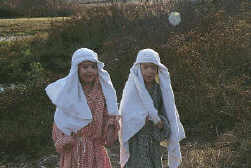
Happy Days are Here Again Isaiah and Isaac are 5 years old now. They have come such a long way from the days of banging their heads on walls and biting themselves. I am so proud of them! They were in their first Christmas play in December of 1999. They were too shy to go onto the stage alone, and they hated wearing those towels on their heads that shepherds wear. But somehow their P.A.L.S. volunteer, Miss Dianna, dressed herself in an angel costume, and managed to get them to wear their little head dresses. She walked them up the middle aisle toward the end of the program to worship the baby Jesus. I have never been more proud in my life.
We are happy to be in Indiana now where my husband and I pastor a small rural church that loves our children, and accepts them unconditionally. Our flock views the world through our boys’ eyes. Isaiah and Isaac have their own P.A.L.S. every Sunday. They even sit in "big church" during music time. Sometimes we have outbursts, sometimes we have melt-downs, and sometimes we just don’t have a real good day! But to see Isaiah and Isaac greet people with hugs, and smiles and joy, brings more happiness to my heart than I can express. I play piano for our church, and I face the congregation from the keyboard. We have a time of fellowship at the beginning of the Sunday morning services, where we greet one another with hugs and handshakes. Guess who shakes hands with people now? Isaiah and Isaac. Somehow, some way, they have learned the simple joy of a hand shake. Somehow they have learned to greet people. Sometimes it’s still with a slug, but they know people by name, and they can smile. Yes, it’s on their terms, and yes, they have a long way to go. But look how far they’ve come! Several years ago I’d have never thought this miracle possible. "With men, this is impossible, but with God, all things are possible." Matthew 19:26. (Update on Akins family from Karla: The twins are almost seven years old now. They are
attending church with our family where my husband is the pastor. It has been so
touching and so rewarding to watch them grow spiritually and socially.
Just a Few Resources Books
Internet The Autism Society of America www.autism-society.org
Interactive Metronome -- www.interactivemetronome.com
Through the Roof Ministries www.throughtheroof.org
This is one of my favorites! Sensory Integration Resource Center: www.sinetwork.org
This one has picture symbols you can use to make schedules and communication boards: www.dotolearn.com
Christian Council on Persons with Disabilities: www.ccpd.org
Picture Exchange Communication System: www.pecs.com |
|